
 Category
Solar Basics
New to solar? Start here. Plain-English guides on how solar panels work, on-grid vs off-grid vs hybrid, what you actually need, and how to plan your first system.
3 videos
Solar Basics Videos
 0:35Solar Basics
Mono vs Poly vs Thin Film: Which Solar Panel is Best?
Confused between monocrystalline, polycrystalline and thin-film solar panels? You are not alone. Most homeowners and businesses find it difficult to decide which type is actually best for their needs. This short but detailed video breaks down the real differences in simple language so you can finally understand which one is right for you. We clearly explain how each type of solar panel works, how much power they produce, how much roof or ground space they need, and how they perform in different weather conditions, especially in hot climates. Monocrystalline panels are made from a single pure silicon crystal. This gives them the highest efficiency, usually between 19% to 23%. They produce more electricity from a smaller area, which makes them perfect for small or limited rooftops. Polycrystalline panels are made by melting multiple silicon fragments together. They are more budget-friendly and cost less per watt, but they need more space to generate the same amount of power. Thin-film panels are created by depositing very thin layers of photovoltaic material on glass or metal. They are lighter, more flexible, and actually lose less efficiency in high temperatures compared to traditional silicon panels. By the end of this video you will clearly know which solar panel type matches your roof size, climate, and budget. Whether you are planning a small home system or a larger commercial installation, understanding these differences will help you avoid costly mistakes. Watch till the end and make a smart, confident decision for your solar system based on facts, not just marketing claims.
1 view0:35 0:35Solar Basics
Best Solar Panel Orientation and Tilt Angle Guide for Maximum Output
Solar panel orientation and tilt angle represent the two most critical physical factors determining whether your photovoltaic system will reach peak performance or underperform by up to twenty percent. Achieving the ideal setup requires understanding how solar azimuth (compass direction) and inclination angles dictate the intensity and duration of sunlight hitting your solar cells throughout the day. When panels are misaligned or laid completely flat on sub-optimal roofs, they miss out on crucial peak-hour radiation, reducing your overall daily energy harvest. This comprehensive breakdown explores the fundamental science of sun-tracking geometry, explaining how optimizing your orientation allows you to capture maximum solar irradiance without needing to invest in additional expensive hardware or more panels. Beyond basic positioning rules, real-world installations face structural challenges such as roof pitches, chimneys, surrounding trees, and architectural shading that can disrupt energy flow. Different geographic regions experience distinct sun paths, requiring specialized adjustments—whether you are dealing with high-latitude seasonal shifts in Europe and North America or the intense, direct overhead radiation characteristic of the Middle East. We examine the trade-offs between fixed-tilt mounting systems, seasonal angle adjustments, and complex split-roof orientations (such as east-west arrays), detailing how modern microinverters and power optimizers help mitigate the losses caused by suboptimal directions. By understanding these regional variations and structural constraints, you can tailor your setup to balance maximum energy generation with long-term mechanical stability. Ultimately, proper system planning safeguards your financial return on investment and ensures your clean energy generation remains reliable year-round. A well-calculated tilt angle acts like a natural amplifier, protecting your system against seasonal declines in power output during shorter winter months while preventing overheating and efficiency drops during scorching summer peaks. Whether you are managing a residential rooftop, a commercial facility, or a standalone ground-mounted structure, aligning your panels correctly reduces your grid dependency and accelerates your payback period. Dive into our complete guide to master the calculations, avoid costly placement mistakes, and maximize the lifelong yield of your solar investment.
1 view0:35 0:35Solar Basics
On-Grid vs Off-Grid vs Hybrid Solar: Which System Actually Fits Your Home?
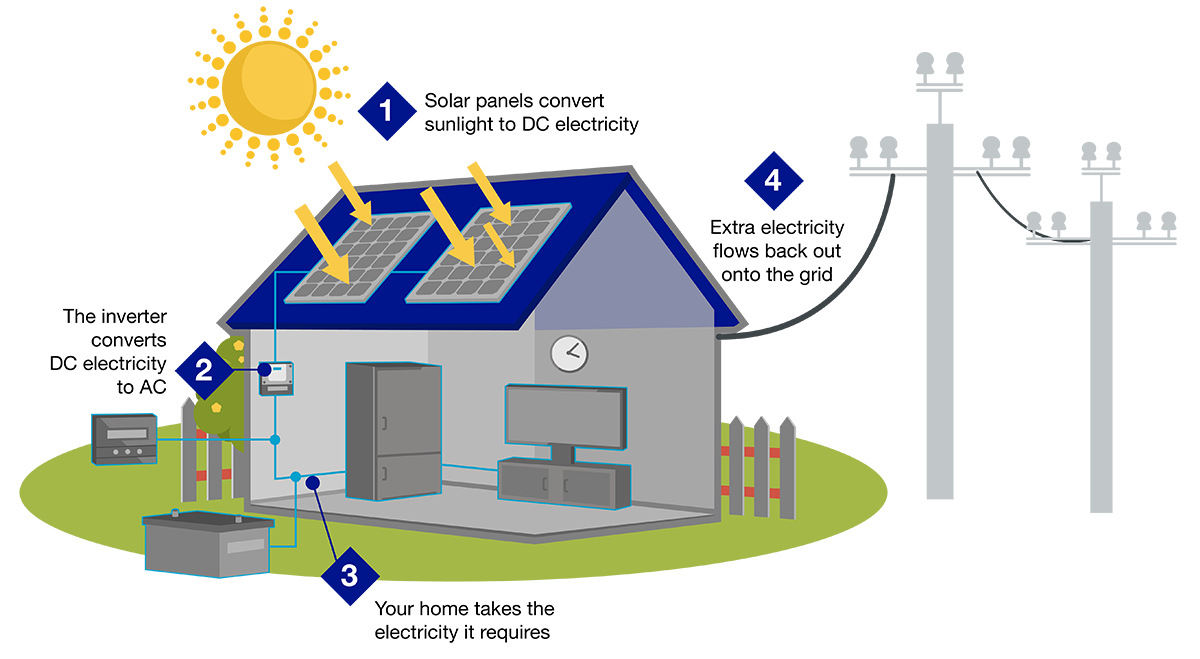
Confused between on-grid, off-grid, and hybrid solar? You are not alone. These three systems look almost identical on paper — same panels, same rooftop, same promise of lower bills — but they behave very differently once installed. They differ in upfront cost, in what happens during a blackout, in how much of your own solar you actually consume, and in how many years it takes to earn the investment back. Choosing the wrong one is one of the most expensive mistakes a homeowner can make in a solar project. This video breaks down all three in under a minute, and this page expands on every point in detail. An on-grid system, also called grid-tied, connects directly to your local utility network. When your panels produce more than the house consumes, the surplus flows outward through a bidirectional net meter and earns you credits. When output drops at night or under cloud cover, the house simply pulls power back from the grid. There is no battery in a standard setup, which is exactly why it is the cheapest of the three at roughly $800 to $1,500 per kW installed, and why it can cut electricity bills by 50 to 90 percent depending on local policy. The trade-off is absolute: when the grid goes down, the system shuts down too, for the safety of line workers. On-grid is the default choice across North America, Europe, and most urban Asian cities where supply is dependable. An off-grid system takes the opposite approach. It has no utility connection at all — it generates, stores, and supplies every unit of electricity your home uses, with no fallback if something runs short. Batteries are the heart of the design, holding daytime surplus for use at night and through cloudy stretches, and the array is typically oversized by 20 to 50 percent so you are not left dark after a bad weather week. All of that storage and headroom pushes cost to $1,500 to $3,500 per kW. It is the right answer where there is genuinely no grid to connect to, or where the cost of extending a line to your property is prohibitive — remote farms, rural regions across Africa and Asia, and homes built for complete energy independence. A hybrid system sits between the two at $1,200 to $2,500 per kW. It stays connected to the grid but adds battery storage, so instead of exporting every surplus unit, the system can hold some back for later. Smart energy management lets it prioritize direct solar use first, charge batteries with what is left over, and draw from the utility only when both are exhausted. That raises your self-consumption share significantly. During an outage it keeps essential circuits alive for anywhere from 4 to 24 hours depending on battery capacity and household load. Hybrid is gaining ground fastest in regions where tariffs are climbing or outages are routine. We also cover the deciding factors that matter more than the system labels themselves: how reliable your local grid genuinely is rather than how reliable you assume it is, whether your region runs net metering or net billing and what exports actually pay, your realistic budget against a payback window of 3 to 8 years with incentives or 6 to 12 without, battery chemistry and lifespan since LiFePO4 storage runs $200 to $500 per kWh and will need replacement within the system's life, and the honest question of whether backup power is a real requirement for your household or simply a nice-to-have that adds cost. By the end you will know which of the three fits your home, and why the cheapest system upfront is very often not the cheapest system over ten years. Full written guide with cost tables, battery sizing charts, backup duration comparisons, and region-by-region pricing is available on Solar Bazaar.
5 views0:35


